



|
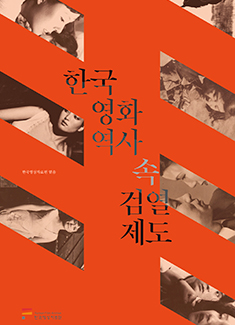
etc Censorship in Korean Movie History 2016 l Korean Film Archive
This book deals with censorship in movies, which was relatively left out of domestic movie studies, to provide a direction for such studies. Movies portray the era when they were made, and they were censored in many different ways. Many were censored and not submitted to international film festivals because they depicted Korean society as too dark, and some were shortened from a 160-minute running time to 100 minutes, and the titles of some were changed for being too suggestive. Many filmmakers resented this censorship for a long time. However, censorship was only revisited as short episodes in newspaper columnist sections or in the heroic tales of some filmmakers, and was seen as the government’s one-way control policy. This book attempts to understand the complexity of censorship as an escape from a narrow definition of censorship.
The book starts with five essays by Lee Sun-jin. “Main Focus of Censorship after Liberation” explores how domestic movie censorship worked from liberation to the period of the Motion Picture Code of Ethics Committee in 1961, and also looks at how limits to expression were determined. The other essays deal with the period in the late 1960s when movie censorship was enhanced. Cho Jun-hyeon deals with censorship trends during the late 1960s and provides a topographic map of these changes. Park Sun-young shows that even comedies were not free from censorship by writing about comedies with a focus on Seo Young-chun. Park Yoo-hui looks at the censorship of erotic movies in the late 1960s, and Song A-reum writes about how the movie < Girl Going to the City > was pulled from theaters because of complaints from people in the bus industry, including a bus attendant, and the influential power of censorship. This book will act as a stepping stone for studies on movie censorship following < Movie Censorship During the Colonial Era in 1910~34 > published by the Korean Film Archive in 2009. |
| Writer/Researcher |
. Cho Jun-hyeong (head of Research Center at the Korean Film Archive)
. Lee Sun-jin (Korean film researcher) . Park Seon-yeong (research professor at Korea University) . Park Yu-hui (professor at Korea University) . Song A-reum (Korean film researcher) |
|---|---|
| Contents |
Publisher
Introduction – Finding a new direction for studies on movie censorship – Cho Jun-hyeong Main focus of movie censorship after liberation – Lee Sun-jin Is it double censorship or triple censorship? The meaning and change in trends in the Korean movie censorship system during the late 1960s – Cho Jun-hyeong “Brightness” and “vulgarity” in comedy movies during the late 1960s: Improper materials and issues of censorship in Seo Young-chun’s comedy – Park Seon-yeong Pornography called “censorship”: From <A Quiet Dream> to <Madame Aema>, the dynamics of censorship and reenactment – Park Yu-hui Censorship as social approval, disapproval as a protruding voice: The meaning of the suspension of screening <The Maiden Who went to the City> (1981) – Song A-reum |

kofa@koreafilm.or.kr
© Korean Film Archive. All Rights Reserved