



Scenic views of Korean movies through magazines
From Noksung to Cine21
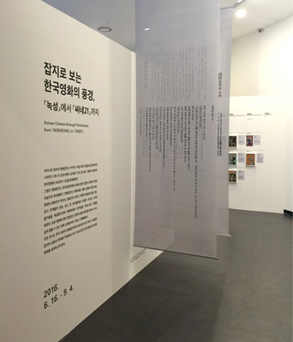
The first movie magazine in Korea was published in November 1919 one month after the release of < Fight for Justice > the first domestic motion picture, and such magazines have accompanied Korean films for 100 years. Throughout that time, movie magazines took on numerous forms along with the development of the film industry. Movie magazines provided joy to the audience by including film critics, information about movie screenings, images of movies and actors, stories about actors, information about production and distribution, reactions from the time, and advertisements. Moreover, by providing relentless chapters about movies so that anyone can easily access information about them, this exhibition focuses on the past 100 years of Korean movie companies and movie culture, ranging from the first domestic film magazine to various different types of magazines throughout history. Also, it contains a message that in order for Korean movies to improve, domestic movie magazines need to be revived to contain information from movie critics and record Korean film history.
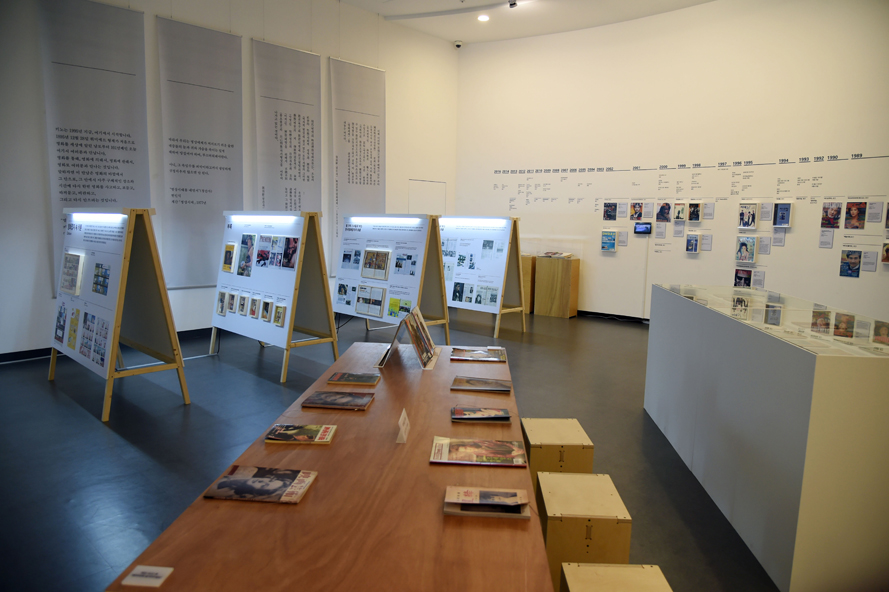
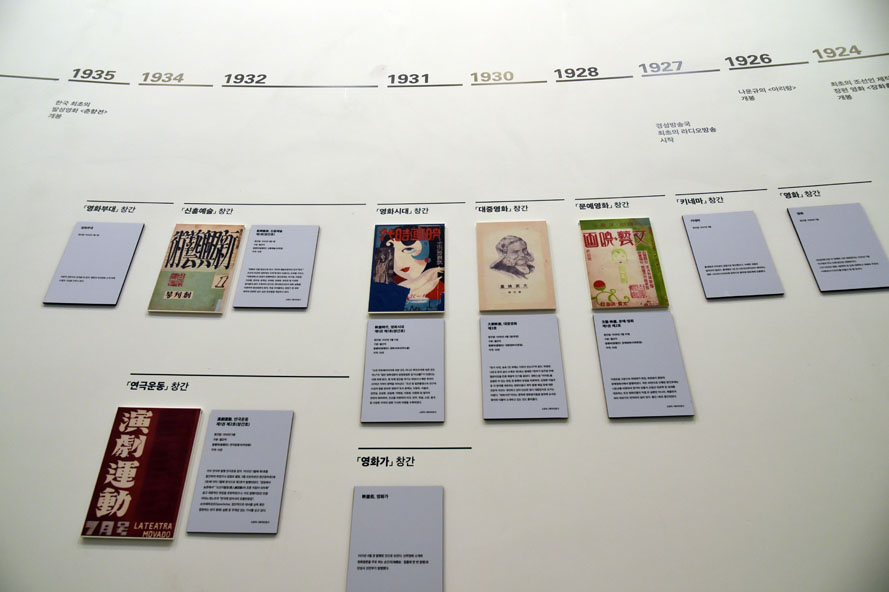
The first Korean motion picture debuted in 1903, and there were no Korean movie magazines before 1919. During this period information about motion pictures were listed in the「Hwangseong Newspaper」 and「Maeil Newspaper」. The movie magazine「Nokseong,」made by Japanese students, appeared in November 1919. During this period, movie magazines were sort of like advertisements for movies made by people working in the movie industry. Except for 「Cinema Era」 published in 1931, most of the magazines died out. About 17 movie magazines were published before independence.
「Nokseong」(1919), 「Movie」(1926), 「Kinema」(1927), 「Literary movies」(1928), 「Public movies」(1930), 「Cinema era」(1931), 「Yeonghwaga」(1931), 「Sinheung art」(1932), 「Art movement」(1932), 「Sinheung Movie」(1932), 「Movie troop」(1934), 「Film Korea」(1936), 「Korean film」(1936), 「Mak」(1936), 「Yeonghwabo」(1937), 「Stage」(1939), 「Movie and Play」(1939)
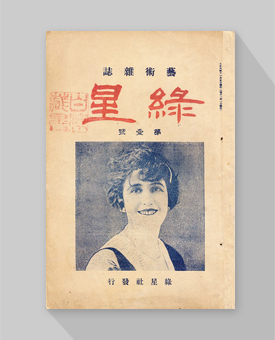
Published by Noksung Company in Tokyo and sold in Gyeongseong by Jokseong Company.
According to the 90-page first issue in Korea, movies “Revolutionize our spiritual minds through contents in arts” but only “ingredients from the cinema came as it was the first,” so instead it only dealt with “literacy.” However, it stopped publishing after the first one and is known as the first Korean movie magazine.
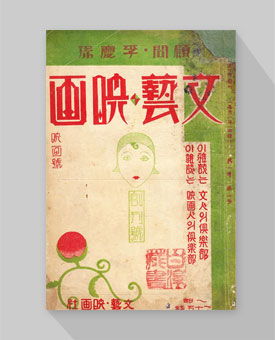
Lee Gyung-son was an adviser, Choi Young-tae edited it and Choi Ho-dong published it in Pyeongyang with the Literary Movie Company.
The 48-page first issue includes writings by Na Un-gyu, Jung Ki-tak, Kang Hong-sik, Sin Il-sun, and Im Un-hak, who were the representative Korean movie-related people, and also an essay on a trip to Paris by Charlie Chaplin was translated. It stopped with the first issue.
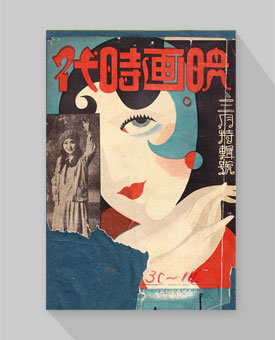
The magazine, published with the proclamation, “Without belonging to the proletarians or bourgeois, it will belong to the general movie public, keeping strictly neutral,” continued over 20 years after the Liberation, even though there were several suspensions of publication during that time.
It included the work of pioneers from Korean and Japanese studios, namely, Yoon Baek-nam, Lee Myeong-u, Kim Yeon-sil, Kim Seong-chun, Kim Il-hae, Il Byeong-il, Lee Chang-yong, and An Jong-hwa, along with articles and criticism from America, Manchuria, Germany, the Soviet Union, and China.
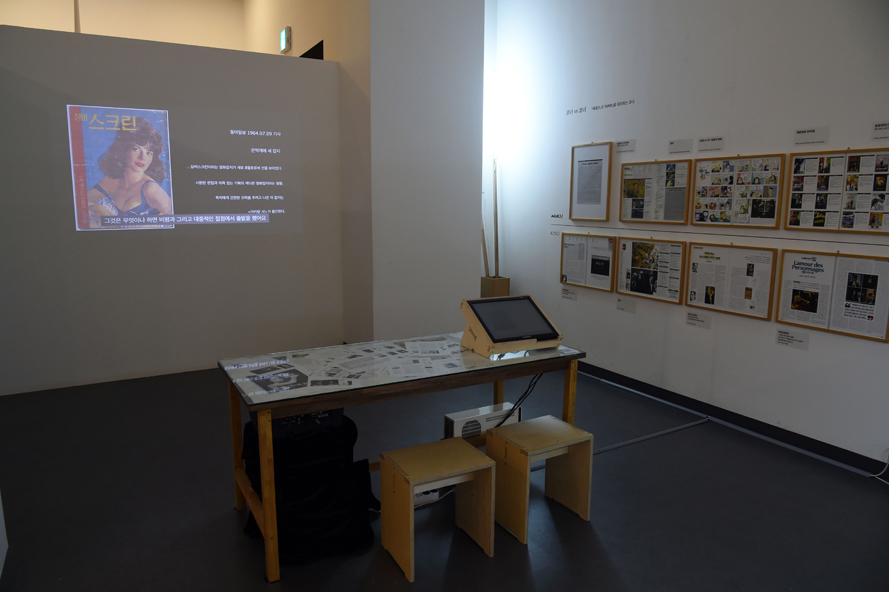
About 25 movie magazines were published from Liberation to 1970s. Many filmmakers strived to revive the Korean movie industry with a government policy to exempt taxes for domestic movie production after the Korean War. Along with a revival of domestic movies, movie magazines also gained popularity again. By 1954, a new magazine called 「Movie World」 appeared. It is recognized as the starting point of such magazines. In 1964, 「Silver Screen」, a magazine that greatly influenced the magazine industry, was published. This magazine contained professional and popular materials such as movie criticism and established a platform for many critics to become known. Moreover, the film company The Century Co., Ltd., based in Daehan Cinema, published a magazine called 「Screen」 in order to advertise its own movies and imported movies.
「Sinseong」(1946), 「Movie Sunbo」(1947), 「Art Film」(1948), 「New Movie」(1949), 「Play Literature」(1949), 「Eun Young」(1949), 「Drama and Cinema」(1954), 「Movie World」(1954), 「Star-」(1955), 「International Film」(1955), 「Modern Movie」(1955), 「Screen」(1956), 「New Movie」(1957), 「New Angle」(1957), 「Scenario Literature」(1959), 「Film Art」(1959), 「Cinema Fan」(1960), 「Life of Beauty」(1960), 「Movie Information」(1960), 「Movie Magazine」(1963), 「Silver Screen」(1964), 「Film Entertainment」(1964), 「Domestic and Foreign Movies」(1965), 「Movie TV」 (1966), 「A Study on Movie Culture」(1970)
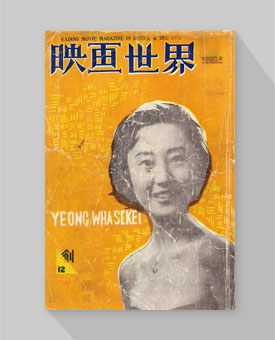
A representative movie magazine of the 1950s-60s that began in December 1954. Most movie magazines of that time were short-lived, but Movie World and International Film were published for a long time and were loved by many people. The publisher and editor when it was first issued were Jung Un-seon and Kim Gap-san, respectively, but it was taken over by Kang Dae-jin who was both the CEO and publisher, at the end of 1950s. When it was first published, Jung Un-seon said the purpose of the magazine was to help improve Korean movies, and it criticized policies regarding domestic movies comparing with how foreign films increase the market share. For that reason, the first issue focuses extensively on Korean movies with articles such as 「A Trend of Domestic Producers」, Hwang Sung-su’s 「Movie Production Policy」, Kim Gwang-sub’s 「For a Revival of Korean Movies and Non-policy of Imported Foreign Movies」, and Lee Han-gu’s 「National Policy and Arts of Korean Movies」.
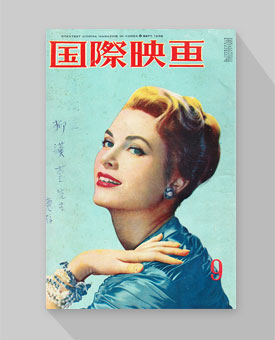
The estimated date of the first issue is around November 1955. The initial production staff consisted of publisher Park Bong-hoe, chief editor Noh Man, and editor Chon Baek-won. International Film lasted for 25 years until 1980, when an army coup implemented a media consolidation policy. It is known as the longest published magazine.
It was mostly concerned with stories about domestic and international celebrities, summaries of movies, and advertisements but it also discussed policies about Korean movies and facilities.
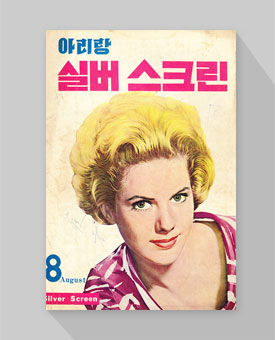
『「Silver Screen」 was published by Lee Wol-jun, who stepped down from the executive team of the monthly magazine company「Arirang」(Sam Jung-dang publisher), which influenced the magazine the most.
It was called 「Arirang Silver Screen」 from the beginning to the end, and was published with the goal of providing tips for the audience to better appreciate already popularized movies. The magazine diagnosed trendy youth films in a section titled “background and reality of Korean youth films,” with articles such as “Heavily Japanese Influenced Pseudo Youth” by Kim Jong-won and “Talking about Youth Films” and “Tragedy of Directionless Production” by Sin bong-seung. Furthermore, it also contained more professional information in “Seminar for Future Movie People,” and in particular provided differentiated material with essays such as “My Direction Notes” by director Yoo Hyeon-mok, who produced < Aimless Bullet >, a scenario tutorial by writer Kim Ji-Hwan, who wrote the scripts for < A Young Look > (Lee Seong-gu, 1960) and < Beautiful Shroud > (Lee Hyeong-pyo, 1962), and “Acting Class” by theater director Lee Jin-soon. The magazine published 15 issues until the last one featuring Elizabeth Taylor on the cover in November 1965.
The Korean movie industry experienced a renaissance from the mid-1950s to the 1960s. Domestic movie production exceeded 100 films in 1959, with an ongoing improvement in the industry. With the introduction of public television programs in the early 1960s, the Korean movie industry experienced a rapid downfall along with a drop in quality. Only 10 movie magazines that were heavily influenced by the success of Korean movies were published during this time, and the most active magazine, 「International Film」, ceased with a media consolidation policy in 1980. A magazine published by the Korean Film Commission, 「Korea Cinema」, continued by dealing with policies for Korean movies, urgent issues with domestic movies, and the direction of foreign movie productions. It also published a literary coterie magazine called 「Yeong Sang Shi Dae」which a lot of movie makers from different fields gathered to produce. Even though Korean movies, along with the magazines, experienced a recession during the 1970s-80s, 「Screen」 was published in 1984. After 「Roadshow」 was published by critic Jeong Sung-il in 1989, domesti movie magazines once again experienced a heyday. 「Screen」 and 「Roadshow」 can be seen as the start of Korean movies.
「Korea Cinema」(1971), 「Monthly Film」 (1973), 「Quarterly Issued Yeong Sang Shi Dae」(1977), 「Screen」(1984), 「Video」(1984), 「Cinema」(1987), 「Movie Digest」(1988), 「Roadshow」(1989), 「Video Plaza」(1989), 「Video Movie」(1990)
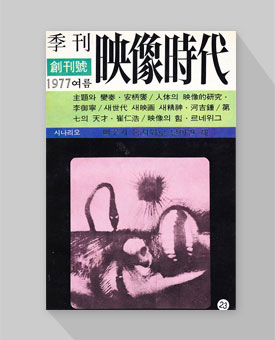
This was a literary coterie magazine with movie makers from different genres, but shared the same purpose.
Its contributors included Kim Seung-ok, Choi In-ho, Kim Hwa-young, Ha Gil-jong, Kim Ho-seon and Lee Jang-ho. The first issue included 「Theme and Variations」 by An Byeong-sub, which dealt with the films of Fran?ois Roland Truffaut such as “Jules and Jim” and “Two English Girls,” Ha Gil-jong’s 「New Generation, New Movies, New Spirit」 and a scenario for 「One Flew Over the Cuckoo’s Nest」. It started as a quarterly magazine but only lasted one year with 2 issues.
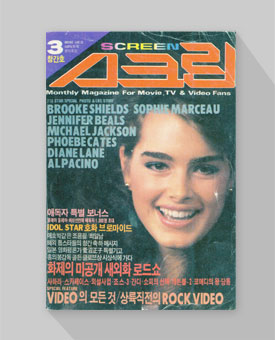
This was a professional movie magazine that dealt with current issues of Korean movies as well as functioning as a bromide paper with celebrities to target the younger generation.
Before 「Roadshow」 appeared, 「Screen」 gained popularity as the only movie publication in Korea. It was truly a beautiful period for movie journalists as actor Ahn Sung-ki would personally drive them home, and a new actress, Kim Hye-su, would bring food to the editing room.
Director Park Chan-uk wrote for the magazine as a critic and also did an interview with Quentin Tarantino. The last issue was in 2011.
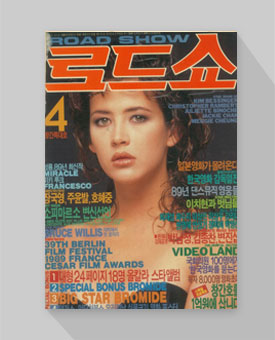
「Roadshow」, launched on April, 1989, can be explained with an appearance by Jung Seong-il.
“Dossier, a pull-out guide of 「Roadshow」, was a kind of outlet for movie fans that quenched their thirst for a movie. Jung Seong-il, a chief editor of 「Roadshow」, left the magazine in 1992 and acted a critic for both a monthly magazine 《Mal》 and newspaper Hankyoreh. He also appeared on “Jung Eun-im’s movie song” on MBC FM as a regular guest. His walk of life as a film critic led to a leader of an imaginary community called “Cinephile”.. He founded the magazine with a large marketing campaign that it will buy their first issue at the price of one hundred million won after 10 years, but it eventually closed before completing 10 years of publication.
Korea’s film industry underwent a recession along with other industries during the early 1990s. The film < The Marriage Life > started a romantic comedy genre, and many other domestic movies appeared in different genres, attracting a large audience again. 「Screen」 and 「Roadshow」, which started in 1980 as rivals, led movie magazines during the early 1990s, and 「Roadshow」 in particular focused on professional movie critics and aimed to be high quality magazine, unlike other magazines that were filled with advertisements for teenagers and fan club invitations for Cantonese actors. In 1995, the 100th anniversary of Korean movies, professional publications on film worthy of attention appeared. Among them were 「Cine21」 and 「Kino」, which led improvements of the Korean movie industry with film critics. They formed a rivalry even though one was published weekly and the other monthly. Following the trend, 「Film 2.0」 was published and began to compete with 「Cine21」 as they were both weekly magazines, and contributed to the improvement of domestic movies by providing professional information. By 2000, with the economic recession from the IMF cold wave and advent of a high-speed Internet, movie magazines started to go bankrupt. As of today, only 「Cine21」 remains, waiting for another professional movie magazine to come about.
「Cinephile」(1994), 「Cine21」(1995), 「Kino」(1995), 「Premier」(1995), 「Image Culture」 (1998), 「Film Culture」(1998), 「Independent Film」(1999), 「Film 2.0」(2000), 「Movie Week」(2001), 「DVD21」 (2001), 「DVD2.0」(2002)
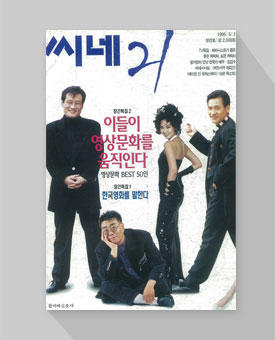
This is the first weekly movie magazine published by the newspaper Hankyeoreh in April 1995.
The first editor was Cho Seon-hoe, who worked as a journalist in the culture department and focused on Korean movies, unlike in other previous movie magazines, by writing articles such as “Who Leads Korean Movies?” in the first issue. “Korean Movies Power 50” was a similar publication that became a representative Korean movie magazine that provided news and issues in the industry along with criticism. Previous editors such as Cho Seon-hoe, Heo Mun-yeong, Nam Dong-cheol and journalists and critics from 「Cine21」 such as Kim Yeong-jin, Lee Sang-yong, Sim Yeong-seop, and Hwang Jin-mi stay active in different fields. It separated from Hankyeoreh in August 2003, and is still published to this day.
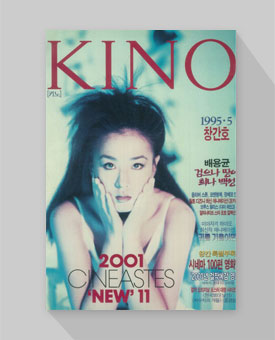
Published by the editor of 「Roadshow」, Jung Sung-il, and the editor of 「Screen」, Lee Yeon ho, Kino was subtitles ‘“the magazine awaited for 100 years is about to come.”
In an interview in a special introductory article, Jun Sung-il described 「Kino」as follows: “Kino, a group noun. It published 67 books since its first publication in May 1995. It caused many casualties and many scapegoats. Every first issue of the year will include commentaries about the top 10 movies of the year and introduce the 10 best movies by subscribers with the title ‘Comrades.’ We always believe interviews are the best introduction to movies, and our best ideology is friendship and the best aesthetic is novelty.”
It’s final issue was 99th in 2003.
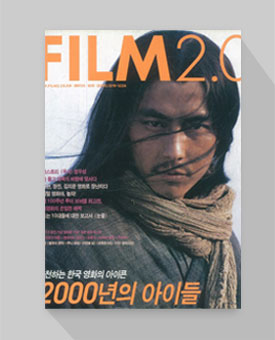
「Media 2.0」, which started as an online journal, expanded offline, and the first issue was published on December 19, 2000.
During its peak, it even exceeded Cine21 in street sales volume. In 2005, it was the first Korean magazine exported to Japan with the original name. It received a warm welcome from many moviegoers for its simple design compared to other movie magazines. However, it went bankrupt in 2008 as a result of the financial crisis and an unstable profit structure.

kofa@koreafilm.or.kr
© Korean Film Archive. All Rights Reserved