



Cinematic Spaces: Brazil
Date : 2025.11.18.Tue ~ 12.31.Wed
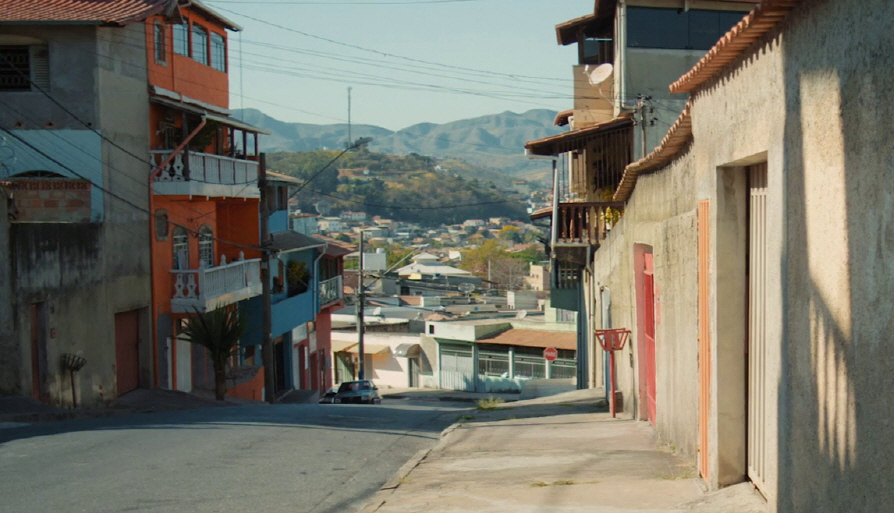
‘Cinematic Spaces’ aims to offer audiences the opportunity to travel to iconic locations through their cinematic representations. Each iteration of the series has featured a wide range of films that viewed together formulate a vivid and tangible sense of place, one hopefully so potent that audiences would have felt transported. Now we head to our next destination of Brazil.
‘Cinematic Spaces: Brazil’ brings together 31 films that offer a rich exploration of the vitality of Brazilian cinema. These films collectively celebrate the enduring legacy of Brazilian filmmaking, inviting us to step into the lived and imagined spaces of Brazil. The program is divided into three sections, each curated by a different programmer to highlight distinct curatorial perspectives.
Panorama
The ‘Panorama’ section offers a sweeping view of Brazilian cinema through ten exceptional works spanning more than 80 years. The scope of the selection allows for the appreciation of a diverse range of Brazilian films over the decades. World-renowed classics such as Mario Peixoto's groundbreaking silent experimental film Limite (1931), Anselmo Duarte’s Palme d’Or winner The Given Word (1962), Walter Salles’s poignant road movie Central Station (1998), and Fernando Meirelles and Katia Lund’s iconic crime epic City of God (2002) are showcased alongside rediscovered gems such as Lima Barreto’s influential Brazilian western The Bandit (1953), Alberto Cavalcanti’s delightful comedy A Real Woman (1954), and Suzanna Amaral’s female coming-of-age tale Hour of the Star (1985). More recent works of Brazilian cinema include Kleber Mendonca Filho’s astounding debut Neighboring Sounds (2012), Joao Dumans and Affonso Uchoa’s lyrical ode to wandering souls Araby (2017), and Andre Novais Oliveira’s poetic tribute to his hometown Contagem, Long Way Home (2018). Together, these films offer a compelling introduction to the captivating world of Brazilian cinema.
Cinema Novo & Cinema Marginal
The two sections that follow delve deeper into the history of Brazilian film, each spotlighting a major cinematic movement. The ‘Cinema Novo’ section, curated by Roberto de Freitas Soares of Cinemateca Brasileira, is a selection of 11 films from the influential 1960s Cinema Novo movement and includes the works of renowned filmmakers Glauber Rocha, Joaquim Pedro de Andrade, Leon Hirszman, among others. ‘Declaration of Fools: Cinema Marginal and Beyond,’ curated by Leonardo Bomfim of Cinemateca Capitolio, explores the Cinema Marginal movement from the late 1960s to the early 1970s. This section presents five films associated with that movement, five companion works that engage in dialogue with them, and a special screening of Lee Jang-ho’s Declaration of Fools (1983), which inspired Leonardo’s curatorial approach. Both programmers have provided in-depth written commentaries on their respective sections and the selected films.
‘Cinematic Spaces: Brazil’ is the most extensive and comprehensive Brazilian film retrospective ever held in Korea. Among the lineup, 22 films are being screened in Korea for the first time. This retrospective has been made possible thanks to the expertise of programmers Roberto Soares and Leonardo Bomfim, the dedication of archivists at the Cinemateca Brasileira and Cinemateca Capitolio, and most importantly the filmmakers who have gifted the world with works that inspire and nourish us. We extend to all of them our deepest gratitude.
Through this program, audiences are invited to immerse themselves in the ‘memory of space’ and the ‘texture of time’ shaped by a nation’s cinema. We hope that, through these Brazilian films layered across decades, viewers will experience firsthand the mesmerizing world they conjure on screen.
***
Young Jin Eric Choi
Programmer at Korean Film Archive, Seoul, Republic of Korea
Introducing 'Cinema Novo'
Cinema Novo, an aesthetic movement which emerged in the 1960s, sought to renew Brazilian cinematic language through critical realism, while also aiming to create a tangible political impact by engaging society. The movement stood out for its "politique des auteurs", low-budget productions, and its break with classical and industrial cinema.
It emerged during a period of profound social and political upheaval in Brazil. The 1960s were marked by rapid urbanization, growing social inequality, and a country divided between concentrated wealth and extreme poverty. The 1964 military coup established a repressive dictatorship, restricting civil and cultural freedoms. In this context, the lives of marginalized populations and working-class communities, often invisible in commercial cinema, became the focus of these films that offer diverse portrayals of the country's economic, social, and political issues.
Seeking a distinctive and truly Brazilian artform, Cinema Novo rejected many elements of traditional narrative, such as linear continuity and fluid editing, favoring freer and more experimental forms. This aesthetic was often shaped by production constraints, requiring creativity in the face of limited resources. Thus, the concept of the aesthetics of hunger, formulated by Glauber Rocha, proposes that cinema reflect poverty, inequality, and social marginalization. This raw, direct language transformed scarcity into artistic power and social critique: "an idea in the head, and a camera in the hand".
Cinema Novo positioned itself against the preceding studio films, dominated by chanchadas (musical comedies), while entering into dialogue with the various European New Waves. The movement is commonly divided into three phases: the first, during most of the 1960s, emphasizes critical realism, exposing social injustices, and the pursuit of the aesthetics of hunger; the second, at the end of the decade, combines more explicit political engagement with greater narrative and technical sophistication; and the third, in the 1970s, explores metaphors, symbolism, and poetic forms, maintaining its social commitment amid censorship and production constraints.
Cinema Novo reshaped Brazilian cinematic language, influenced new generations of filmmakers, and drew attention to social issues and independent production, demonstrating the potential of politically engaged, formally innovative filmmaking. Its films were also recognized internationally, contributing to the visibility of Brazilian cinema on the world stage.
***
Roberto de Freitas Soares
Programmer at Cinemateca Brasileira, Sao Paulo, Brazil
Introducing 'Declaration of Fools: Cinema Marginal and Beyond'
Worlds can open up when someone visits a Cinematheque. During a brief stay in Seoul, a visit to KOFA revealed an unexpected missing link between Korean and Brazilian cinema. In a conversation with programmer Eric Choi about 'One is Few, Two Would Fill' (Odilon Lopez, 1970), a feature restored by Cinemateca Capitolio, I discovered an exhilarating dialogue with 'Declaration of Fools' (Lee Jang-ho, 1983), particularly in the way humor and experimentation can function as political tools under a repressive regime. As I delved deeper into Lee Jang-ho’s chaotic universe, this dialogue appeared even broader: there is a remarkable connection, especially with the transgressive movement known as Cinema Marginal, which emerged in the 1960s during the Military Dictatorship (1964–1985). The spark ignited: why not imagine a panorama of Brazilian cinema guided by 'Declaration of Fools?'
One of the remarkable phenomena of the late 1960s was the emergence of ruptures within ruptures. The New Cinemas, established mostly in the early years of the decade and which had brought fresh waves of inspiration to various corners of the world, suddenly confronted even more radical works, often created by younger, more provocative filmmakers, who opened new possibilities for invention.
In Brazil, Cinema Marginal can be seen as a "second wave" in relation to Cinema Novo, emerging through a series of daring films released between 1967 and 1972. These works provoked both admiration and outrage within a climate of passionate, sometimes virulent debate. Directors such as Rogerio Sganzerla, Julio Bressane, Ozualdo Candeias, Carlos Reichenbach, and Andrea Tonacci revitalized the country’s cinematic landscape through an irreverent, inventive approach inspired by American B movies, Japanese Nuberu bagu, the popular Brazilian comedies of the 1940s and 1950s, and the ruptures of European New Cinemas.
Collectively, this generation was short-lived. From 1969 onward, as the dictatorship grew increasingly repressive, films became more experimental. The ossification of language gave rise to works driven by screams, howls, scatological gestures, and phrases repeated to exhaustion – a true declaration of desperate fools. Humor, however, did not disappear, even as it assumed more aggressive forms. In the 1970s, censorship and political persecution forced many directors into exile, while others ceased making films. Few names managed to continue their careers. Cinema Marginal was cut off in mid-flight, yet its legacy persists, manifest in a range of contemporary Brazilian films.
***
Leonardo Bomfim
Programmer at Cinemateca Capitolio, Capitolio, Brazil
[PROGRAMMER INTROS]
* PANORAMA
- 11.18 (Tue) 16:00 Araby
- 11.22 (Sat) 12:30 The Given Word
+ Young Jin Eric Choi, Cinematheque KOFA Programmer
* CINEMA NOVO
- 12.2 (Tue) 19:00 Entranced Earth
- 12.6 (Sat) 12:00 S. Bernardo
+ Roberto de Freitas Soares, Cinemateca Brasileira Programmer
* DECLARATION OF FOOLS: CINEMA MARGINAL AND BEYOND
- 12.12 (Fri) 17:00 The Margin
- 12.13 (Sat) 13:00 The Woman of Everyone
+ Leonardo Bomfim, Cinemateca Capitolio Programmer

Films

kofa@koreafilm.or.kr
© Korean Film Archive. All Rights Reserved